LL37 – 5mg
$89.97
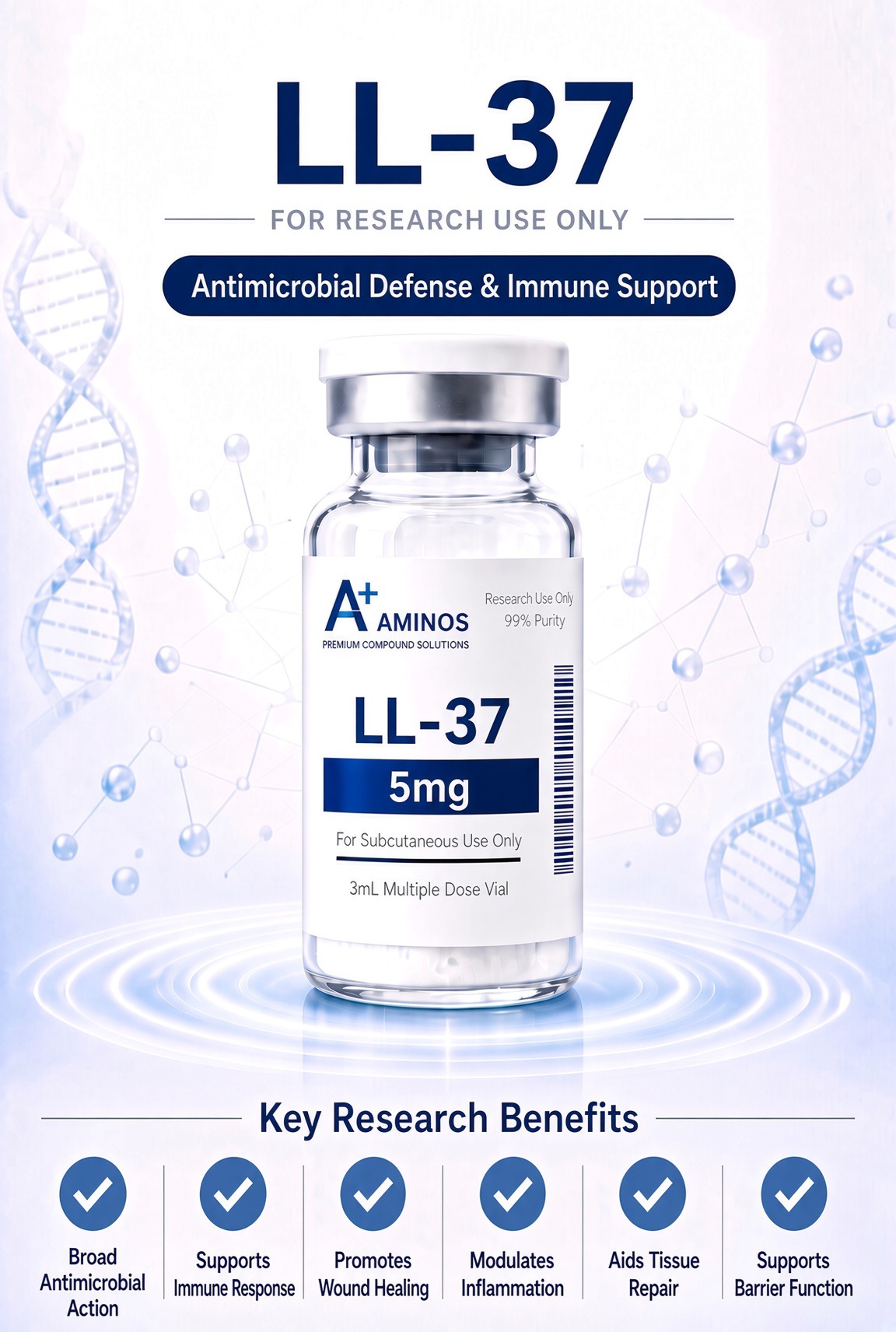
LL-37 is a 37-amino-acid linear peptide and the only known endogenous member of the cathelicidin family of antimicrobial peptides (AMPs) produced by the human body. Derived from the cleavage of the hCAP-18 precursor protein, it carries a strong net positive charge (+6) and an amphipathic alpha-helical structure. LL-37 functions as a major component of the innate immune system, widely utilized in microbiological, immunological, and tissue repair research to study direct pathogen membrane destruction and advanced host-defense signaling cascades. [1, 2, 3, 4]
Key Features & Characteristics
- Mechanism of Action: Utilizes its cationic structure to electrostatically bind to negatively charged microbial cell walls, inserting its hydrophobic region to form transmembrane pores that induce rapid cell lysis. [1]
- Dual-Action Signaling: Acts both as a direct antimicrobial agent against pathogens and as an immunomodulatory signaling peptide that recruits neutrophils, monocytes, and T-cells to localized experimental environments. [1, 2]
- Biofilm Disruption: Demonstrates the unique ability to penetrate dense extracellular polymeric substance (EPS) matrices, preventing initial bacterial attachment and breaking down established microbial biofilms. [1]
- Physical Form: Produced via high-fidelity chemical synthesis to limit endotoxin contamination and supplied as an ultra-pure, white lyophilized powder requiring precise fluid reconstitution. [1, 2]
Primary Research Applications
- Antimicrobial Resistance (AMR): Heavily studied as a potential alternative or synergistic agent to conventional antibiotics against drug-resistant pathogens, including MRSA and Pseudomonas aeruginosa.
- Wound Healing & Angiogenesis: Investigated in tissue repair models to track its role in stimulating re-epithelialization, promoting vascular growth (angiogenesis), and accelerating dermal remodeling.
- Autoimmune & Inflammatory Pathways: Evaluated in immunological research to observe its complex behavior in conditions like psoriasis and dermatitis, charting how it binds to nucleic acids to regulate or trigger specific Toll-like receptor (TLR) responses. [1, 3, 4, 5]
For Research Use Only. Not for human consumption, therapeutic, or diagnostic use.
99 in stock



Reviews
There are no reviews yet.